How Long a Drain Unclogging Job in São José dos Campos Really Takes and What It Costs
Most guides tell you to call a plumber and leave it at that. What they skip is the part residents actually argue about in neighborhood groups: how long the crew will be inside your home, what the invoice will look like when they leave, and which parts of the price are negotiable. If you live in the Paraíba Valley and your kitchen drain has started gurgling again, this is the practical conversation you have been looking for.
A desentupidora São José dos Campos SP callout is usually a same-day visit, a diagnostic look at the affected line, and a mechanical or hydro-jetting intervention that clears the blockage before the technician leaves. The time and the invoice depend less on the neighborhood and more on what is blocking the pipe and how far the obstruction sits from the access point.
What You Actually Pay For and How Long Each Stage Takes
The first thing to understand is that a drain service is not one job. It is a sequence of small jobs, and each one has its own clock. When a neighbor says “they were here for twenty minutes,” they are usually describing a kitchen sink with a shallow grease plug. When someone else says “it took all afternoon,” they are describing a collapsed lateral line under a slab. Both are normal, and both are priced differently.
The call, the dispatch and the arrival window
Emergency dispatch is the fastest part of the process. In a city the size of São José dos Campos, a crew based in the urban core can usually reach neighborhoods such as Jardim Aquarius, Vila Adyana or Bosque dos Eucaliptos within a short window, while outlying districts like Eugênio de Melo or São Francisco Xavier add travel time. This is why the phone call matters: the dispatcher needs the address, the type of drain, and whether water is backing up into more than one fixture. That last detail tells the team whether they are dealing with a local clog or a main-line problem, and it changes which truck they send.
Expect the arrival window to be the single biggest variable in the total time you spend waiting. A scheduled visit during business hours is predictable; a late-night emergency on a holiday weekend is not. Ask for a realistic window rather than the optimistic one, and you will be less frustrated when the crew arrives.
Diagnosis: the fifteen minutes that decide the price
Once on site, the technician does a short inspection. This is not padding. The diagnosis determines whether the job is a simple rodding, a hydro-jetting pass, or a camera inspection to locate a break. A professional will check accessible cleanouts, test how quickly water drains, and ask whether the problem has recurred in the same spot. Recurrence is the tell that the pipe itself, not the contents, is the issue.
The diagnosis is the moment where a cheap quote becomes an accurate one. A company that skips it and quotes a flat fee over the phone is guessing, and you will pay for that guess later if the blockage turns out to be roots or a collapsed section.
Clearing the line: rodding versus hydro-jetting
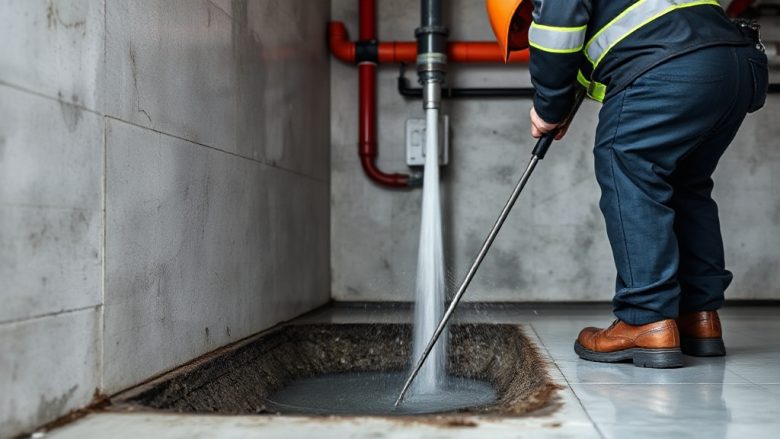
Mechanical rodding uses a rotating cable to break through soft blockages such as soap scum, hair and grease. It is fast, usually under an hour for a residential line, and it is the right tool for a straightforward kitchen or bathroom clog. Hydro-jetting uses high-pressure water to scour the full inner diameter of the pipe, removing grease film and scale that a cable leaves behind. It takes longer, needs a truck with a water tank, and is the better choice for restaurant grease lines, older condominium stacks and any drain that keeps coming back.
The trade-off is real: rodding is cheaper per visit, hydro-jetting is cheaper per year because it reduces repeat calls. If your drain has clogged three times in twelve months, the second option is the one that actually solves the problem.
Cleanup and verification
A proper job ends with a flow test and a cleanup. The technician runs water through the fixture, checks that no other drain in the unit is backing up, and removes debris from the work area. This stage is short but it is where you learn whether the job is genuinely finished. If the crew leaves without testing, call them back before you sign anything.
| Stage | Typical duration | What drives the cost |
|---|---|---|
| Call and dispatch | Minutes to a few hours | Time of day, distance, urgency |
| Diagnosis | 10–20 minutes | Number of fixtures affected, access to cleanouts |
| Rodding a residential line | 30–60 minutes | Depth of clog, pipe diameter, access |
| Hydro-jetting | 1–3 hours | Length of line, grease load, equipment required |
| Camera inspection | 30–60 minutes | Whether a break or root intrusion is suspected |
| Septic tank pumping | 1–2 hours | Tank size, sludge level, truck access |
None of these numbers are promises. They are the ranges you should expect so you can tell the difference between a normal job and one that is running long because something was missed.
How to Judge Whether the Price Is Fair and When to Call
The question residents ask most often is not “who is cheapest” but “how do I know I am not being overcharged.” The honest answer is that a fair price is one you can trace back to a diagnosis, a method and a scope of work. A quote that arrives before anyone has looked at the drain is not a price; it is a placeholder.
What a reasonable quote should itemize
Ask for the visit fee, the method proposed, the length of line covered, and whether cleanup and flow testing are included. A desentupidora São José dos Campos provider that works with emergency callouts should be able to explain these four items before starting. If the answer is a single number with no breakdown, ask what happens if the blockage turns out to be deeper than expected. The response tells you whether the company has done this before.
Be cautious with quotes that are dramatically below the local range. In drain work, an unusually low price usually means a short cable, a small machine, or a technician who will stop at the first sign of resistance and charge you again next month. Cheap unclogging that recurs is the most expensive option on the market.
Red flags that predict a repeat visit
- The crew does not test water flow after clearing the line.
- No cleanout is opened, and the machine is fed through a fixture instead.
- The technician cannot say what caused the blockage.
- You are quoted a flat price before anyone has seen the drain.
- The invoice does not name the method used.
Any one of these is a signal to ask questions. Two or more together are a signal to choose a different provider. A desentupidora em São José dos Campos SP that takes the time to explain the cause is also the one most likely to prevent the next call.
When an emergency call is genuinely justified
Not every slow drain needs a middle-of-the-night visit. Sewage backing up into a shower or floor drain is an emergency because it is a health issue and it damages finishes. A single slow sink can wait until morning. Water rising in multiple fixtures at once suggests a main-line blockage and should be treated urgently, because continued use will push waste into the lowest point of the property. Everything else can usually be scheduled.
If you are a building manager, the calculus is different. A blocked stack in a condominium affects every unit on the line, and the cost of waiting is measured in complaints and water damage, not just in the service fee. This is why preventive hydro-jetting on a schedule is often cheaper than reactive calls, even though the individual invoice looks larger.
Prevention that actually reduces the bill
Most residential blockages are caused by grease, hair and wipes, in that order. Grease poured down a kitchen sink cools and coats the pipe wall; hair collects on that coating; wipes catch on the result. A simple strainer, a grease container kept on the counter, and a rule against flushing wipes will prevent a large share of the calls a household makes over a decade. For older properties, an annual inspection of the lateral line costs far less than excavation.
Septic systems have their own rhythm. Tanks need pumping on a schedule based on household size and tank volume, not on when they start to smell. Waiting for a backup means the drain field may already be compromised, which turns a routine pump-out into a much larger repair.
The recommendation
If you are comparing providers this week, do three things. First, describe the symptom precisely when you call, including how many fixtures are affected. Second, ask for the method and the scope before agreeing to a price. Third, keep the invoice and note the date, because a documented history of blockages is the strongest argument for a permanent fix rather than another temporary clearing.
The best value in drain work is not the lowest hourly rate. It is the crew that diagnoses before quoting, tests before leaving, and tells you honestly whether you need a return visit. That combination is what separates a one-time expense from a recurring one, and it is the standard worth holding any provider to in São José dos Campos.