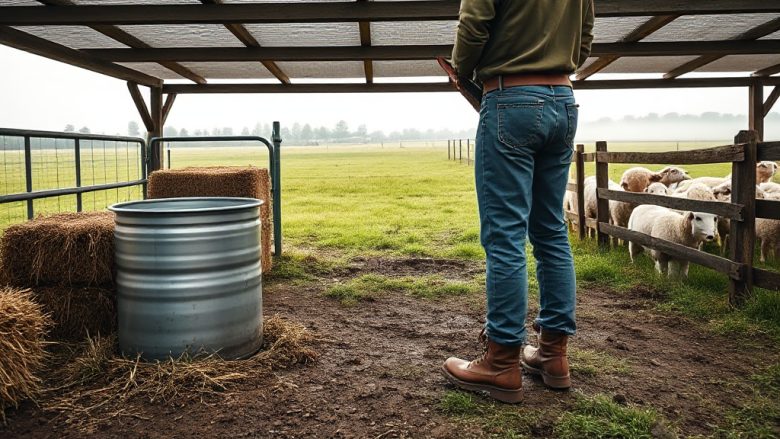
The gate latch is cold at half past six, and the first thing I notice is that the water trough in the far paddock has a skin of ice on it. Two ewes are standing over it, not drinking, just looking at it. That single detail sets the tone for the whole day. If I hadn’t walked that fence line before breakfast, I’d have found out about the frozen trough at noon, when the ewes were already dehydrated and off their feed. Most of what goes right or wrong on a small livestock holding happens in these first twenty minutes, long before anyone thinks about buying a new handling system.
That’s really the whole secret behind how to improve your livestock farming. It isn’t one expensive upgrade or a new breed. It’s a set of small, repeatable habits that catch problems while they’re still cheap to fix. A farmer who walks the same route every morning and actually looks at the animals will out-perform one with better equipment and no routine, almost every time. Below is the checklist I’ve built up over years of keeping sheep, a few cattle, and a rotating pen of poultry. It’s grouped by how often you need to do it, because that’s how you’ll actually remember it.
The Daily Tasks That Keep Animals Healthy and Productive
Start with water, every single day, before you do anything else. Animals drink more than most new owners expect, and a lactating ewe or a milking cow can go through a startling volume in warm weather. Check that every trough is clean, full, and actually reachable. Algae, drowned rodents, and ice all stop animals drinking, and a stock that won’t drink won’t eat properly either. If you fix nothing else on this list, fix the water and you’ll see a difference within a fortnight.
Then walk the stock. Not a glance from the gate, but a slow loop through the group. You’re looking for the animal that’s standing apart, the one lying down when everyone else is up, the one with its head down and ears drooping. Livestock hide illness well because in a herd, looking weak gets you pushed around. Your job is to notice the small signals before they become obvious ones. Count them while you’re at it. A missing animal is easier to spot when you know exactly how many you should be seeing.
Feed comes next, and consistency matters more than fancy rations. Same time, same place, roughly the same amount. Sudden changes in feed type or quantity are one of the most common causes of digestive upsets in ruminants, and those upsets cost you growth and milk. If you need to change a ration, do it gradually over a week or more, mixing the old and new together. Watch how they eat, too. An animal that leaves its feed or bolts it down unusually fast is telling you something.
Finally, do a quick condition check with your hands, not just your eyes. Run your fingers along the spine and over the ribs of a few animals each day. You’re feeling for fat cover and muscle, and you’ll learn what’s normal for each individual. Body condition is the single best early warning system you have, and it costs nothing but a few minutes. A ewe that’s slipping condition three weeks before lambing is a problem you can still solve with feed. The same ewe two days before lambing is an emergency.
Bedding and ventilation round out the daily round. Dry bedding keeps feet and fleeces healthy and reduces the respiratory problems that plague housed stock. Good airflow without draughts does the same. If you can smell ammonia strongly when you walk into a shed, the ventilation isn’t working and your animals’ lungs are paying for it. Open a vent, adjust a door, and the whole building changes.
Weekly and Seasonal Routines That Prevent Costly Problems
Once a week, set aside an hour for the jobs that don’t need doing daily but fall apart if you skip them. Weigh or condition-score a sample of your animals and write the numbers down. Check hooves and feet, because lameness creeps up quietly and then suddenly half your flock is limping. Inspect fences, gates, and water fittings for the small breaks that become escapes. Clean and check any equipment you rely on, from shears to feed bins. A weekly walk of your boundary fence takes twenty minutes and saves you a morning of chasing animals down a road.
Parasite control sits in this weekly-to-monthly bracket, and it’s where a lot of smallholders lose money without realising it. Don’t treat on a calendar alone. Treat when you actually need to, based on what you’re seeing and, where you can, on a faecal check. Overusing wormers builds resistance, and resistant parasites are a genuine long-term threat to any holding. Rotate grazing where you can, rest paddocks, and keep young stock away from the heaviest-contaminated ground. Moving animals onto clean pasture is one of the cheapest health interventions there is.
Seasonal work is where planning pays off. Before winter, check your housing, your feed stores, and your water supply against freezing. Before summer, sort out shade and fly control, because heat stress quietly cuts milk yield, fertility, and growth. Breeding season needs a calendar, not a guess. Know when you want young born, work backwards, and make sure nutrition and condition are right in the weeks before mating. A thin female at breeding time is a year of lost production.
Vaccination and health planning belong here too. Talk to your vet about what your specific area and species actually need, and build a simple annual plan. Then put every date on the same wall calendar as your breeding and shearing. When the plan lives in your head, something always gets missed. When it lives on the wall, it gets done.
One more seasonal habit worth building: a proper look at your grazing as a whole. Walk the fields and think about how the grass is holding up. Overgrazed pasture recovers slowly and grows weeds. Under-grazed pasture goes rank and loses feed value. Adjusting stock numbers or moving fences to match what the land can actually carry is one of the most effective ways to improve your livestock farming over the long term, and it requires no new buildings or machinery at all.
Simple Records That Show You What’s Actually Working
You can’t improve what you don’t measure, but that doesn’t mean you need software or a thick ledger. A notebook and a pencil will do, as long as you use them consistently. Record the basics: births, deaths, treatments, feed changes, and anything unusual you noticed. Note the date. That’s it. The value comes later, when you look back and see a pattern you’d otherwise have missed. Maybe your losses cluster in one paddock. Maybe a particular feed change always causes a dip. You’d never spot it from memory alone.
Track a few numbers that matter to your operation specifically. For a sheep flock that might be lambs reared per ewe, or the number of animals that needed treatment for lameness this year. For a dairy or beef herd it might be milk per head, or weight gained over a set period. For poultry, eggs per bird or losses per batch. Pick two or three and record them honestly, even when the numbers are disappointing. A number that embarrasses you is still useful information.
The habit that makes records work is reviewing them on a fixed schedule. Once a month, sit down for ten minutes and read back through the last few weeks. Once a year, before you plan the next season, look at the whole thing and ask what you’d do differently. This is where the improvement actually happens. The daily walk gives you data. The records give you the story behind it. Together they tell you which of your routines are pulling their weight and which are just habit.
None of this requires spending money. It requires showing up, paying attention, and writing a few things down. The holding that gets walked twice a day with a notebook in a pocket will slowly, quietly out-produce the one that gets a new piece of equipment every spring but never looks closely at the animals standing in front of it. Start with the water trough tomorrow morning. Then walk the fence line. Then write down what you saw. That’s how to improve your livestock farming, one ordinary morning at a time.