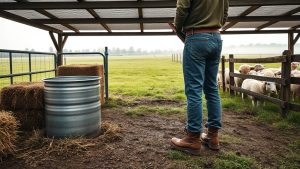
A beginner guide to farm business usually starts with the wrong question. People ask which crops to grow, which livestock to keep, or how many acres they need. Those matter later. What decides whether a small farm survives its first three years is simpler: you need three financial habits in place before you scale anything. Keep records that reflect reality, know your cost per unit, and pay yourself a real wage. Get those three working and the farm can grow. Skip them and no amount of good soil will save you.
Most new farmers are comfortable with the physical work. They can fix a fence, read weather, judge a lamb. The paperwork is where they stall. That’s not a character flaw. It’s a skill gap, and it closes the same way any farm skill does: repetition, a decent system, and a bit of help when you hit a wall.
Why These Three Habits Beat a Business Plan
A business plan is a snapshot. It describes what you intend to do. Habits are what you actually do every week, and they’re what keep a farm solvent when the plan meets weather, disease, and a market that doesn’t care about your projections.
Here’s the order I’d put them in, and why each one comes before the next.
Habit one: keep records that match the bank account
This is the habit that separates farms that know their position from farms that guess. It doesn’t mean accounting software with seventeen tabs. It means every sale, every purchase, every fuel receipt and every vet bill lands somewhere you can find it, dated, within a week.
A simple example. You sell eggs at the gate and take cash. If that cash goes into your pocket and gets spent on groceries, the farm has no record of income and no record of the true cost of production. Six months later you can’t tell whether the hens are profitable or just busy. The fix is boring: a separate farm account, a folder for receipts, and a ten-minute weekly session to enter them.
Do this for a full season before you decide anything big. You’ll learn more from your own numbers than from any course. You’ll see which months are tight, which enterprise quietly eats money, and how much you actually spent on repairs.
Habit two: know your cost per unit
Cost per unit is the number that tells you whether a price is good or terrible. For a flock, it might be cost per dozen eggs. For a market garden, cost per kilo of tomatoes. For a small beef herd, cost per finished animal.
Work it out roughly at first. Add up the direct costs for one enterprise over a season, divide by the units you produced. Include feed, seed, fuel, packaging, and any hired help. Don’t include your own labour yet, that comes next.
Say you sell tomatoes at a farmers’ market. If your cost per kilo is three pounds and you sell at four, you’re making a pound before your time. That sounds fine until you count the hours picking, packing, and standing at the stall. Suddenly the margin looks thin. Knowing the number lets you decide whether to raise the price, cut a cost, or drop the crop. Without it, you’re just hoping.
The same logic applies to livestock. If a lamb costs you more to raise than the market pays, you either change how you raise it or you stop. Sentiment about a particular breed or a favourite field is expensive. The number doesn’t care.
Habit three: pay yourself something
This is the habit new farmers skip most often, and it’s the one that kills businesses quietly. If the farm never pays you a wage, you’re subsidising it with your own time and savings. That works for a while. It stops working when you’re tired, the equipment needs replacing, and there’s nothing set aside.
Decide on a modest draw, even a small one, and pay it on a set day. It might be fifty pounds a week to start. The point isn’t the amount. It’s that the farm has to cover it, which forces you to price properly and to notice when an enterprise can’t carry its share.
There’s a second reason. A farm that pays its owner is a farm that can eventually pay someone else. If you ever want to take a holiday, hire help, or step back from daily milking or market runs, the wage habit has to exist first. You can’t build a team on unpaid labour, including your own.
Set the draw, track it, and treat it as a real cost. If the farm can’t cover it in a given month, that’s information, not failure. It tells you where to look.
Putting the Habits Together and Knowing When to Get Help
Run all three for one full production cycle before you expand. A cycle might be a growing season, a lambing to finishing period, or a full year of egg production. You’ll come out the other side with records, a cost per unit for each enterprise, and a sense of whether the farm can pay you. That’s a far stronger foundation than a twenty-page plan written before you’d sold anything.
You don’t need to do this alone, and you shouldn’t try to. There’s a point where a bit of outside help pays for itself many times over. Here’s when to reach for it.
Get help with tax and legal structure early. Whether you trade as a sole trader or a limited company affects your tax, your liability, and how you pay yourself. An accountant who works with small farms will know the allowances and the record-keeping they expect. This is not the place to improvise. One conversation can save a year of messy books.
Get help with a specific enterprise when the sums stop making sense. If you can’t work out why the pigs lose money while the poultry thrives, a farm business adviser or a more experienced neighbour can often spot the issue in an hour. Ask before you sink another season into a loss-making enterprise.
Get help with funding and grants when you’re ready to invest. There are support schemes for new entrants, equipment, and diversification, but they come with conditions and paperwork. Knowing what you qualify for before you commit money is worth the effort. Your records and cost per unit will make those applications much easier, because you’ll have the figures ready.
What you shouldn’t do is outsource the habits themselves. An accountant can prepare your accounts, but they can’t know your farm better than you do. The weekly record session, the cost per unit calculation, and the decision to pay yourself are yours. They’re the difference between running a farm business and running a very expensive hobby.
Start small. Keep the records honest. Know your numbers. Pay yourself. Everything else, the land, the stock, the markets, gets easier once those three habits are holding the farm up.
Frequently Asked Questions
Do I need a business plan to start a farm business?
Not before you start trading. A plan is useful when you’re applying for finance or a grant, but it can’t replace real records. Spend your first season building the three habits instead, then write a plan based on what you’ve actually learned.
How much should I pay myself from a new farm?
Start with an amount the farm can realistically cover, even if it’s small. The figure matters less than the principle: your labour is a cost, and the business should carry it. Increase the draw as the farm’s margin allows.
What records do I actually need to keep?
Every sale, every purchase, every receipt with a date, and a note of what each expense was for. Keep them in one place, updated weekly. That’s enough to work out your costs, prepare your tax return, and see whether each enterprise is profitable.
When should I hire an accountant?
Before your first tax return, and ideally before you choose your legal structure. An accountant who knows small farms will set you up correctly from the start, which is far cheaper than fixing a year of confused records later.